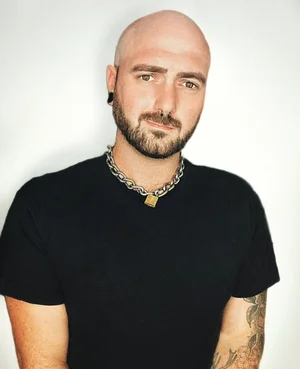
OMG, the Guy from the Gangbang Now Works for Me!
Oh god, you're new employee is also in the community!
They've got a FetLife profile. They've worn a collar. They've been to the same parties.
And you think, Cool. I'm safe here.
But then the energy shifts.
You clock them.
Get quiet.
Treat them with a different kind of scrutiny.
Not because of their work. But because of who you are.
That moment? That tension?
It's called intragroup bias. That's when someone from your own community treats you worse. Not because you're a threat, but because you remind them of the parts of themselves they're still trying to keep buried.
Same community, different rules
Research backs it up. People from the same marginalized group often judge each other more harshly, especially when one of them is trying to stay in control or protect their image.
In the kink world, that judgment shows up in subtle ways.
• You're too open
• Too free
• Too close to the edge of someone else's comfort zone
So instead of mentorship, you get distance.
Instead of care, you get critique.
Instead of community, you get control.
When "us" becomes a leash
Someone once told me:
"Us as queer people can come off a certain way that's off-putting to the outside world."
Like he was doing me a favor. Like that was supposed to be helpful.
But that wasn't us. That was him. Projecting his fear onto me and calling it professionalism.
And that same energy shows up in kink circles too. Especially when the person in power is still holding their public image together with silence and fear.
You see it in lines like:
"We just expect a certain standard around here."
What they really mean is:
You're reminding me of the parts of myself I've spent years trying to suppress. And I'm scared someone else is going to notice.
That's not leadership.
That's a leash no one consented to.
Say the real thing
If someone's behavior needs correction, say the actual thing.
"Hey — the tone of your voice came off like you weren't listening. It made the other person defensive."
That's feedback.
What you don't say is:
"That's not how someone like us should act."
That's fear pretending to be guidance. That's shame pretending to be structure.
The Clark Kent problem
You're in charge. You've got a clean persona. But you're terrified someone's about to blow your cover.
Let's be honest. Not every kinky person is out in every room.
You've got your job. Your email signature. Your squeaky-clean image. And then there's the rest of you. The gangbang at the sex club. The locked alt account. The bookmarked pics. The gear hanging behind a closet door. You've worked hard to keep those two worlds separate.
Then a new employee walks in. He's open. Proud. Doesn't compartmentalize. Maybe he's seen you on Fet. Maybe he's seen you at the club. Maybe he remembers what you sound like when you moan. Now you're panicking. Not because he's done anything wrong, but because someone might connect the dots.
The fear is real. But what you do with it is what matters.
Lead by example
You can have privacy without punishing someone else for their freedom. If someone overshares at work, you don't have to get weird about it. Just model a boundary and say:
"Hey, I assume everyone has a personal life. I want you to. But I don't need the details."
Respectful. Clear. No shame. And if it ever gets uncomfortable, talk to HR like an adult: "I want to make sure I'm holding professional boundaries around personal lives. What's the best way to support that?" You can protect your privacy without turning into a control freak.
Let's get to the hard truth
You don't get to ruin someone else's life just to protect your own.
It is not okay to sabotage a person's career, safety, or mental health just because you're scared someone might find out you were part of a gangbang at the sex club. That new employee might be queer, trans, neurodivergent, POC or visibly kinky in ways that already put them at risk. They might not bounce back as easily as you can. They might not have a backup plan. And you? You know exactly how to make their life hell without ever putting it in writing. Meetings. Reviews. Side comments. Culture fit excuses. So let's be real. That's not about leadership. That's about fear. And if you call that professionalism, you're lying to yourself.
What's really happening
• You're overcorrecting
• You're still carrying shame
• You're terrified of exposure
That fear is yours. Don't make someone else pay for it.
What real leadership looks like
If you're kinky and in power: Check your reaction before you check someone else. Give feedback about behavior, not identity. Stop pretending your silence makes you better. Be the boss you needed when you were younger. And if someone shows up bold and visible? Respect it. Or move out of their way.
Final thought
Kink isn't shameful. Privacy isn't wrong. But fear is not an excuse to punish other people for being free.
We talk about kink as a space of consent, respect, and power exchange. If you're holding power — hold it the way you'd want it held over you.
Because if you start throwing your own under the bus just to protect your mask? You're not leading. You're just hiding. And hurting people who don't deserve it.
So if this hits a nerve? Good. That means you're still capable of doing better. Lead with clarity. Hold boundaries with care. And stop confusing control with safety.
Because the guy from the gangbang? He's already in the building. And maybe he's not your problem. Maybe he's your mirror.